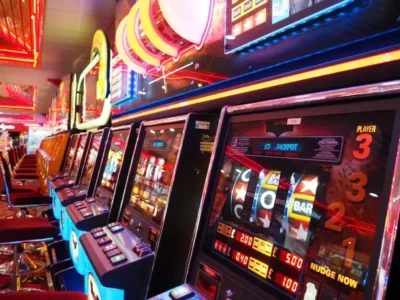
Walk into any modern casino, and you will be greeted by a sensory onslaught. Hundreds of machines flash in a synchronized dance of neon, while a chorus of electronic chimes, cascading coins, and upbeat music fills the air. This is not a random assortment of games; it is a meticulously engineered environment. At the heart of this spectacle are slot machines, which occupy up to 80% of a casino’s floor space and generate the vast majority of its gaming revenue.
The immense popularity of slots is not an accident. It is the result of decades of psychological research, behavioral economics, and advanced software engineering. Every color, sound effect, and payout schedule is designed to interact with the human brain’s reward system, keeping players engaged for as long as possible. Understanding the psychology behind slot design reveals how these machines transform a simple game of chance into an irresistible cognitive loop.
The Power of Operant Conditioning and Variable Rewards
To understand why slot machines are so compelling, one must look to the field of behavioral psychology, specifically the work of B.F. Skinner. In the mid-20th century, Skinner discovered that organisms could be conditioned to repeat behaviors based on rewards. He placed pigeons and rats inside automated cages, known as Skinner boxes, where pressing a lever would sometimes dispense food.
Skinner experimented with different reward schedules and discovered something profound: if the animals received food every single time they pressed the lever, they quickly grew bored and stopped playing once they were full. However, if the food was delivered on a variable ratio schedule—meaning the reward was entirely unpredictable—the animals became obsessed. They would press the lever repeatedly and compulsively, long after the food stopped arriving.
Modern slot machines are the ultimate manifestation of the Skinner box. Players pull a lever or press a button without knowing whether the outcome will be a loss, a small win, or a massive jackpot. This unpredictable pattern triggers a massive release of dopamine, the neurotransmitter responsible for pleasure and motivation. Crucially, the brain releases more dopamine during the anticipation of a reward than during the reward itself. The thrill of what might happen keeps the player anchored to the seat.
Erasing the Pain of Losing: Near Misses and Losses Disguised as Wins
If slot machines only paid out occasionally and delivered flat losses the rest of the time, players would quickly become frustrated and walk away. To combat this, designers employ sophisticated cognitive illusions that trick the brain into thinking it is winning, even when it is losing money.
The Phenomenon of the Near Miss
A near miss occurs when a winning combination appears just one symbol away from the payline. For example, two jackpot symbols line up perfectly, but the third lands just above or below the target line.
Psychologically, a near miss does not register as a loss. Instead, the brain interprets it as a “close win.” Brain imaging studies show that near misses trigger the exact same dopamine surges and neurological pathways as actual wins. This creates the illusion that a jackpot is imminent, encouraging the player to try “just one more time,” despite the fact that every spin is an independent mathematical event with the exact same odds.
Losses Disguised as Wins (LDWs)
In older, three-reel mechanical slots, the outcome was binary: you either won or lost. Modern video slots, however, feature dozens of intersecting paylines. This allows players to bet on multiple lines simultaneously.
Because of this architecture, a player can wager $2.00 on a single spin and “win” back $0.50. When this happens, the machine erupts in celebration. Lights flash, celebratory graphics dance across the screen, and triumphant music plays.
Mathematically, the player has just lost $1.50. Psychologically, however, the sensory feedback registers the event as a victory. The physical and auditory celebration counteracts the psychological pain of losing money, allowing players to deplete their bankrolls while feeling like they are on a winning streak.
Sensory Engineering: Sight, Sound, and Ergonomics
The physical and digital architecture of a slot machine is crafted to induce a state of hyper-focus. Researchers refer to this psychological state as the “slot machine zone.” In this zone, players lose track of time, space, and money, entering a trance-like state where the only thing that exists is the rhythm of the game.
Auditory Architecture
Sound is arguably the most powerful tool in slot design. Casino floors are carefully tuned audio environments. Slot machines do not use harsh, abrasive buzzing sounds for losses. Instead, they utilize pleasant musical intervals, often written in major keys, which naturally evoke feelings of happiness and safety.
Furthermore, the sounds of celebration are intentionally broadcast loudly so that everyone on the casino floor can hear them, creating a false perception that winning is a common occurrence. Conversely, when a player loses, the machine remains relatively quiet, keeping the negative outcome private.
Visual Flow and Ergonomics
The visual elements of modern slots are designed to reduce cognitive fatigue. High-definition screens use warm, saturated colors that are pleasing to the eye over long periods. The physical cabinets are ergonomically designed with comfortable seating, perfectly angled screens, and accessible buttons to minimize physical discomfort. The goal is simple: eliminate any physical distraction that might compel a player to stand up and leave.
The Evolution of Cognitive Traps: Volatility and Gamification
As technology has advanced, slot designers have introduced new features that deepen psychological engagement by offering players a false sense of agency and progression.
-
The Illusion of Control: Many modern slots feature skill-based bonus rounds or buttons that allow players to manually stop the spinning reels. In reality, the outcome of the spin is determined by a Random Number Generator (RNG) the exact millisecond the player presses the start button. Stopping the reels manually changes nothing about the mathematical outcome, but it gives the player a feeling of personal responsibility and control over the game.
-
Gamification and Progression Systems: Borrowing elements from video games, modern slots often feature storylines, character levels, and unlockable achievements. A player might collect virtual coins over several spins to unlock a new map or bonus feature. This introduces the sunk cost fallacy. Players become reluctant to abandon a machine because they feel they have invested time and effort into “leveling up” the game, mistakenly believing that a payout is due.
-
High vs. Low Volatility Dynamics: Designers calibrate games to cater to different psychological profiles. High-volatility slots offer infrequent but massive payouts, appealing to risk-tolerant players seeking a life-changing thrill. Low-volatility slots provide frequent, smaller payouts, appealing to players who want a steady stream of positive reinforcement and longer playtime.
Frequently Asked Questions
Why do slot machines use themes like popular movies, TV shows, or mythologies?
Themes leverage familiarity and nostalgia to lower a player’s psychological barrier to entry. When a player sees a slot machine based on a favorite movie or a well-known cultural myth, it creates an immediate emotional connection and a sense of trust, making them more likely to choose that machine over an unfamiliar one.
Does playing faster increase the chances of winning a jackpot?
No. The speed at which you play has no impact on the outcome of the game. Slot machines rely on a software component called a Random Number Generator, which cycles through millions of number combinations every second. The outcome is determined entirely at the exact microsecond the spin button is pressed.
Why do casinos group slot machines together in long, maze-like rows?
The layout of a casino floor is intentional. Grouping slots in dense, winding configurations creates an immersive environment that blocks out views of the outside world, such as windows and clocks. This spatial design disorients players just enough to disrupt their sense of time, making it easier for them to stay inside the gaming area longer.
What is the purpose of the credit balance display instead of showing actual cash value?
Displaying a player’s balance as “credits” rather than actual currency (for example, showing 400 credits instead of $100.00) creates psychological distance between the player and their money. It abstracts the real-world value of the funds, making it easier to risk large amounts because the player feels like they are gambling with points rather than hard-earned cash.
Do bonus rounds actually require skill to win more money?
With very few exceptions, bonus rounds are entirely predatory illusions of skill. Whether you pick a hidden treasure chest, spin a virtual wheel, or shoot at targets on a touchscreen, the prize amount was already determined by the Random Number Generator when the round was triggered. The interactive choices are merely entertainment designed to provide a sense of agency.
Why do some slot machines have massive, overarching signs showing progressive jackpots?
Progressive jackpot displays tap into the psychological concept of availability heuristic and FOMO (fear of missing out). Watching a massive digital counter tick upward second by second creates a sense of urgency and excitement. It keeps the idea of a life-changing win at the forefront of the player’s mind, overshadowing the mathematical reality of the incredibly low odds of winning it.